High-stakes governance
Institutional teams were defining who could initiate and approve sensitive digital-asset operations.
Digital finance for institutions and private wealth.
One role across two high-stakes financial products.
Authorization Matrix is a core control system in Zand’s digital asset custody platform. Across five major versions, it balanced enterprise governance with clarity in high-stakes decisions.
Each iteration addressed the same problem from a new angle: users had to understand the governance model before configuring it.
Institutional teams were defining who could initiate and approve sensitive digital-asset operations.
Users needed a mental model of policies, activities and roles—not only a simpler form.
A visible sequence, contextual guidance and an optional learning path preserved control without overwhelming users.
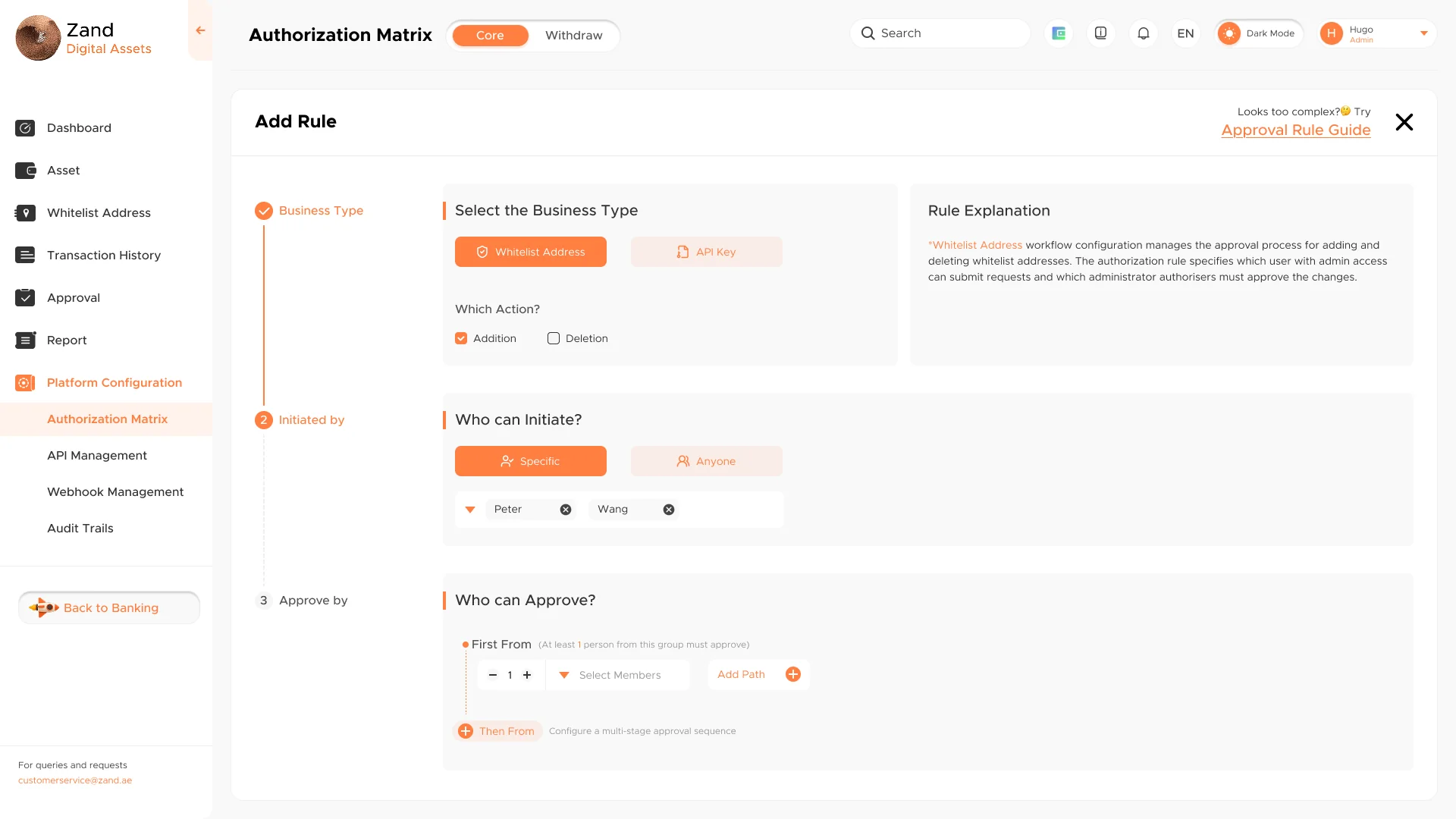
The first version translated an invisible authorization policy into a four-step workflow: business type, initiator, approver and confirmation.
Externalize the system model as a visible, sequential rule-building flow.
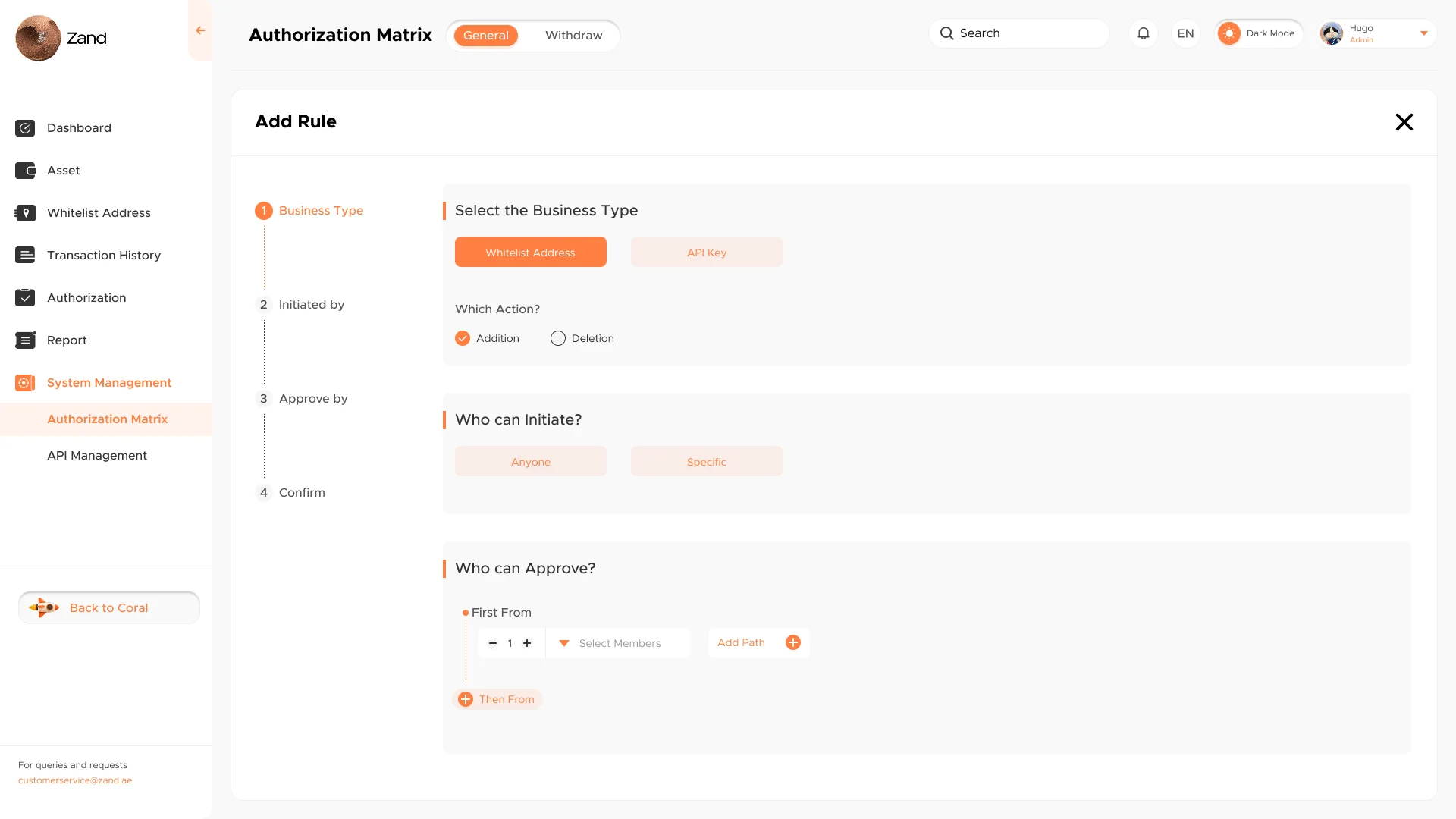
STRUCTURE → CONTEXTA visible flow still needed persistent orientation.
The product was expanding beyond a single authorization scenario, so the structure had to reflect governance rather than system settings.
Reframe the area around core policy governance and make member selection explicit.
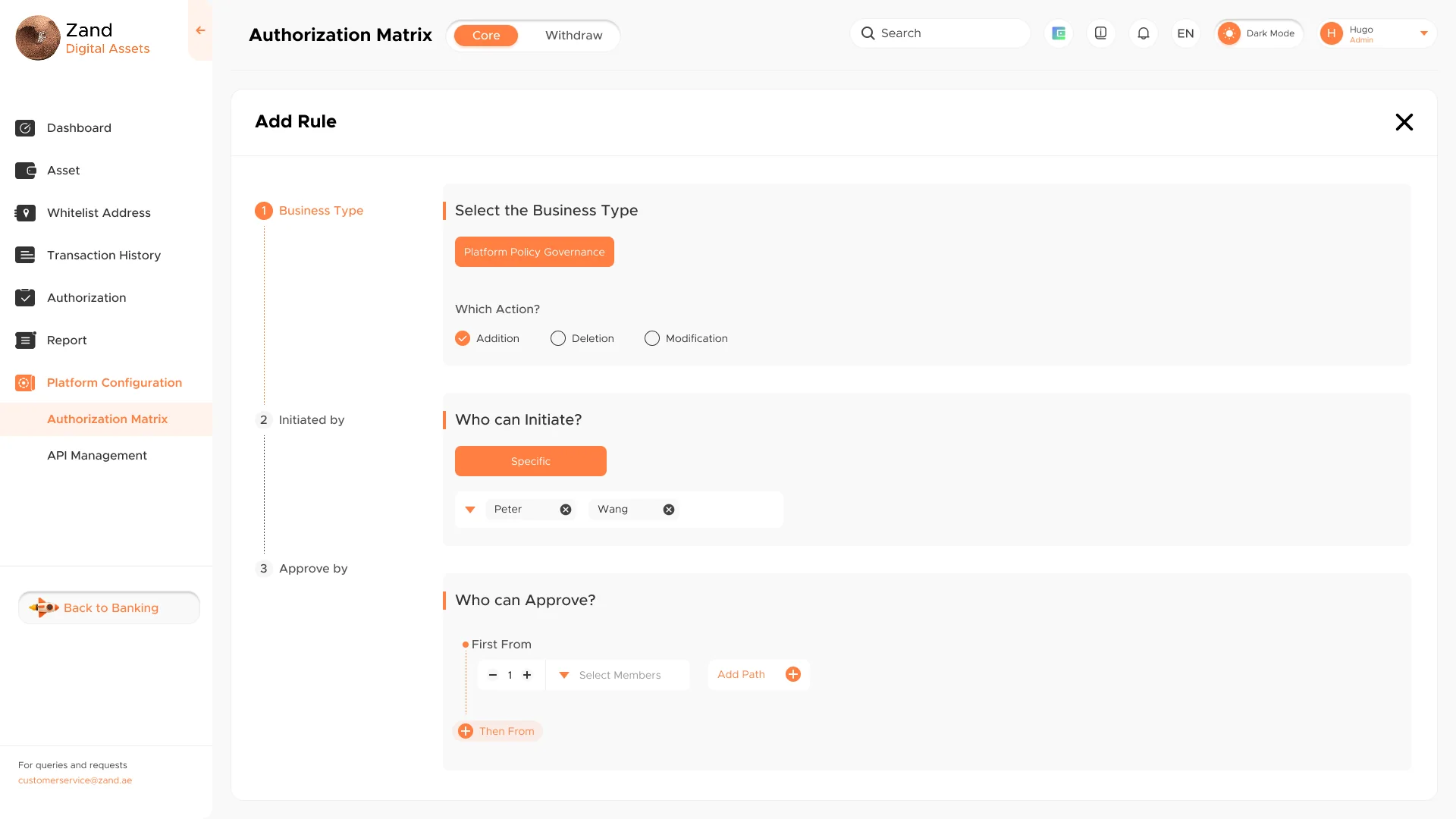
CONTEXT → MEANINGBetter structure still could not explain consequences.
The interface began teaching users what each configuration would mean operationally, not only where to click.
Add contextual explanations and API-access warnings beside the relevant decision.
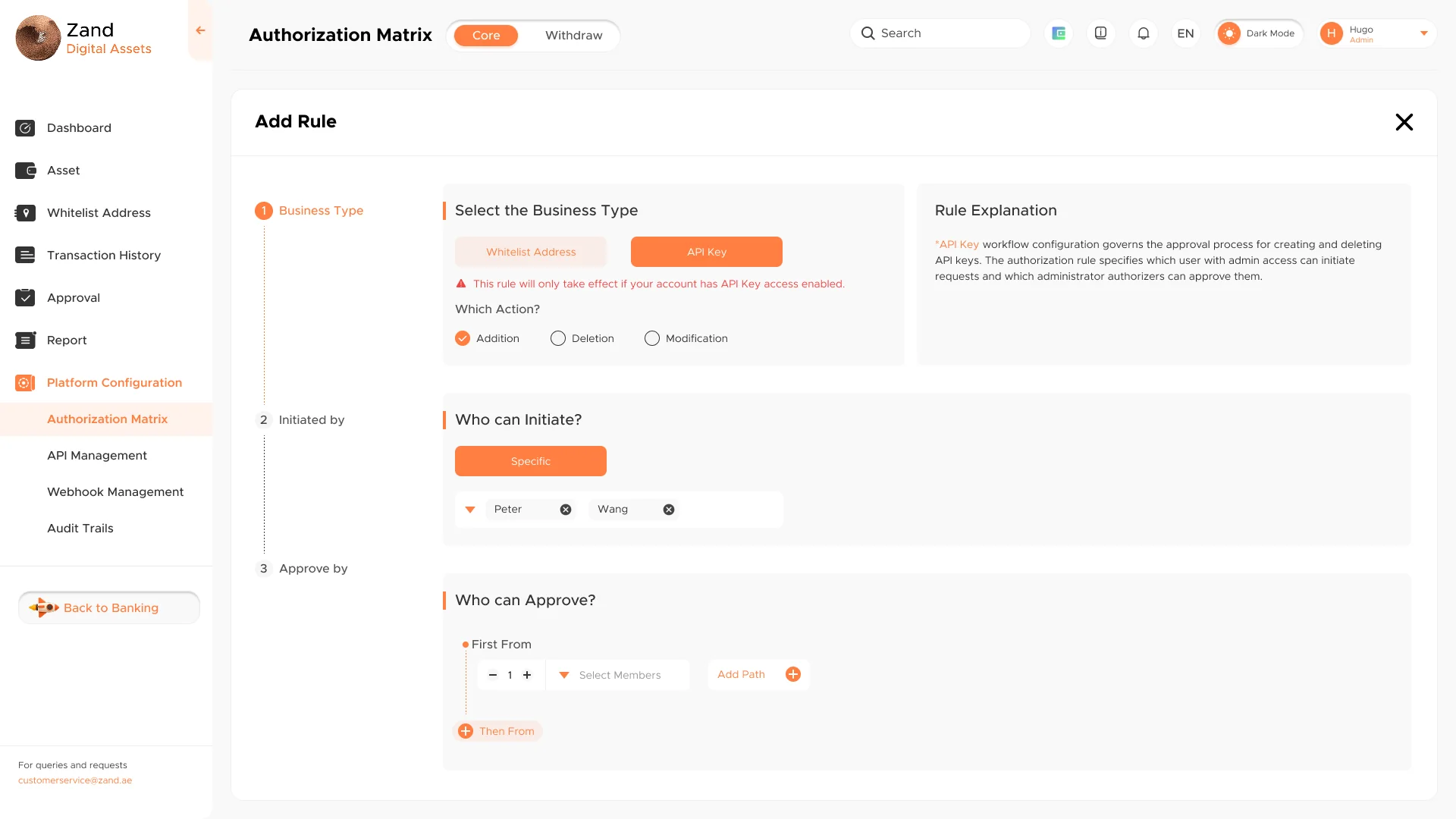
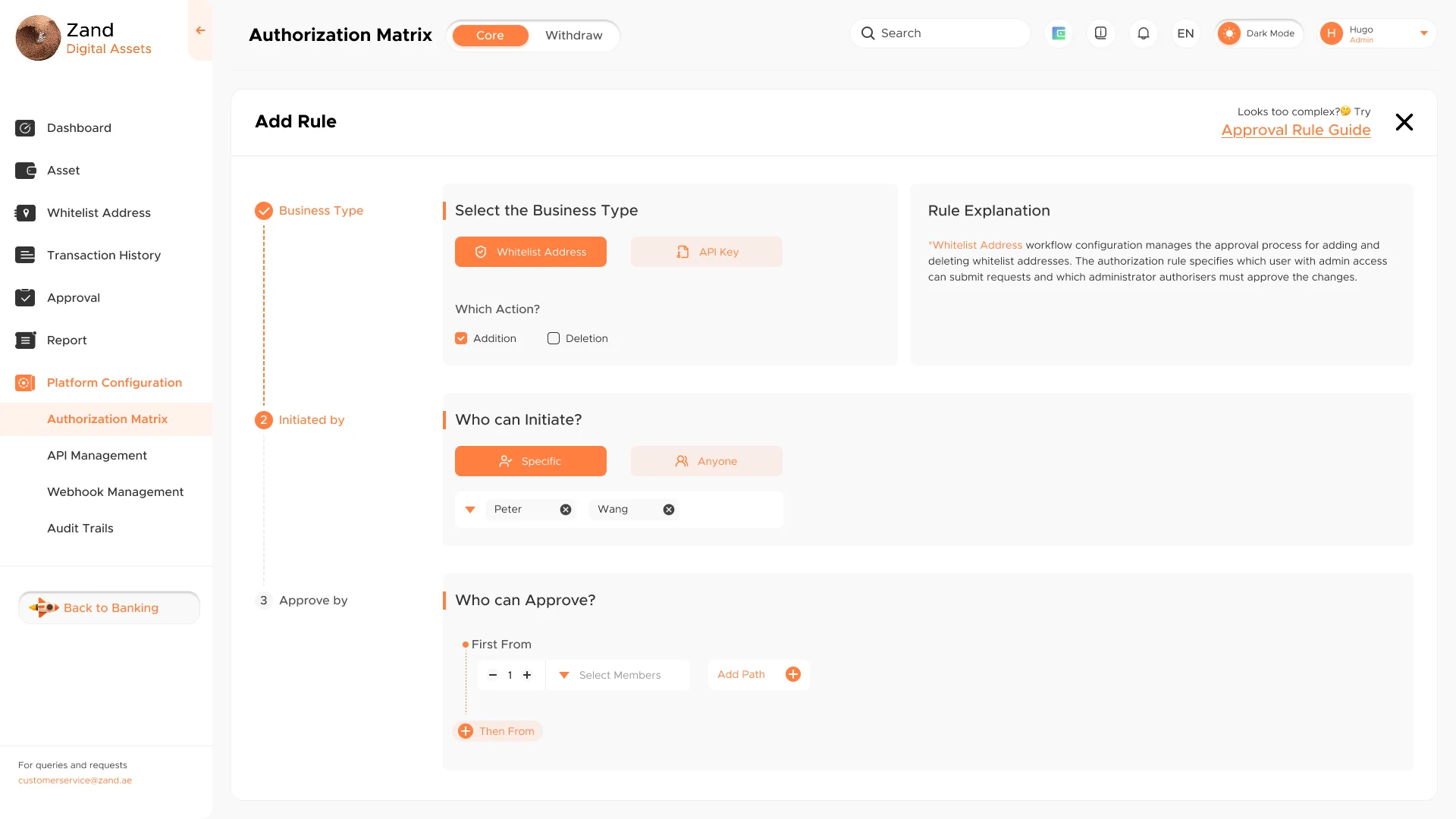
MEANING → GUIDANCEContextual help worked, but first-time users needed a gentler entry.
Version four introduced an optional Quick Guide, breaking the rule system into focused, low-risk choices.
Clarify responsibility before configuring individual actions.
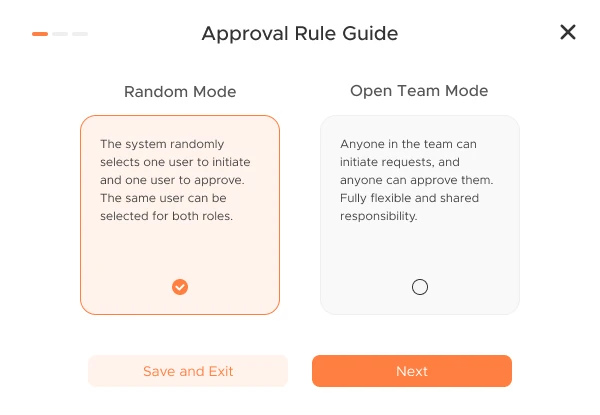
Translate system language into two clear operational choices.
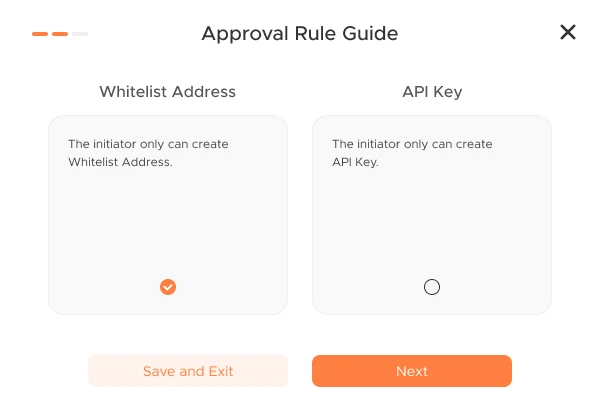
End with an explicit summary instead of an ambiguous configuration.
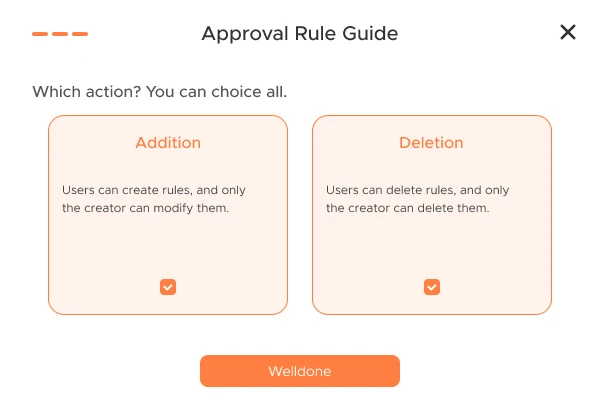
Swipe through the complete decision flow.
The Quick Guide helped during configuration. Institutional teams also needed to review and circulate the governance model before entering the workflow.
Policies, business activities, initiators and approvers formed a mental model that could not be taught through labels alone.
I designed a nine-page visual guidebook that moves from core concepts to configuration and real approval tasks.
It gave onboarding and support teams a reusable reference while letting users learn before and during setup.
In-product guidance supported the moment of action. The guidebook supported understanding before action.
GUIDANCE → SYSTEMGuidance became part of the product, not a layer added after it.
The fifth iteration refined hierarchy, microcopy and approval cues while preserving flexibility.
One mobile view brings private clients’ accounts, deposits, investments and digital assets into a clear financial relationship.

A cinematic welcome establishes warmth and privacy before the first financial decision.
A single number summarizes the client’s complete position across the bank.
Accounts, deposits, investments and digital assets become one legible portfolio.
High-frequency tasks remain available without disrupting the overview.

Every financial decision follows one structure: understand, compare, act and monitor.
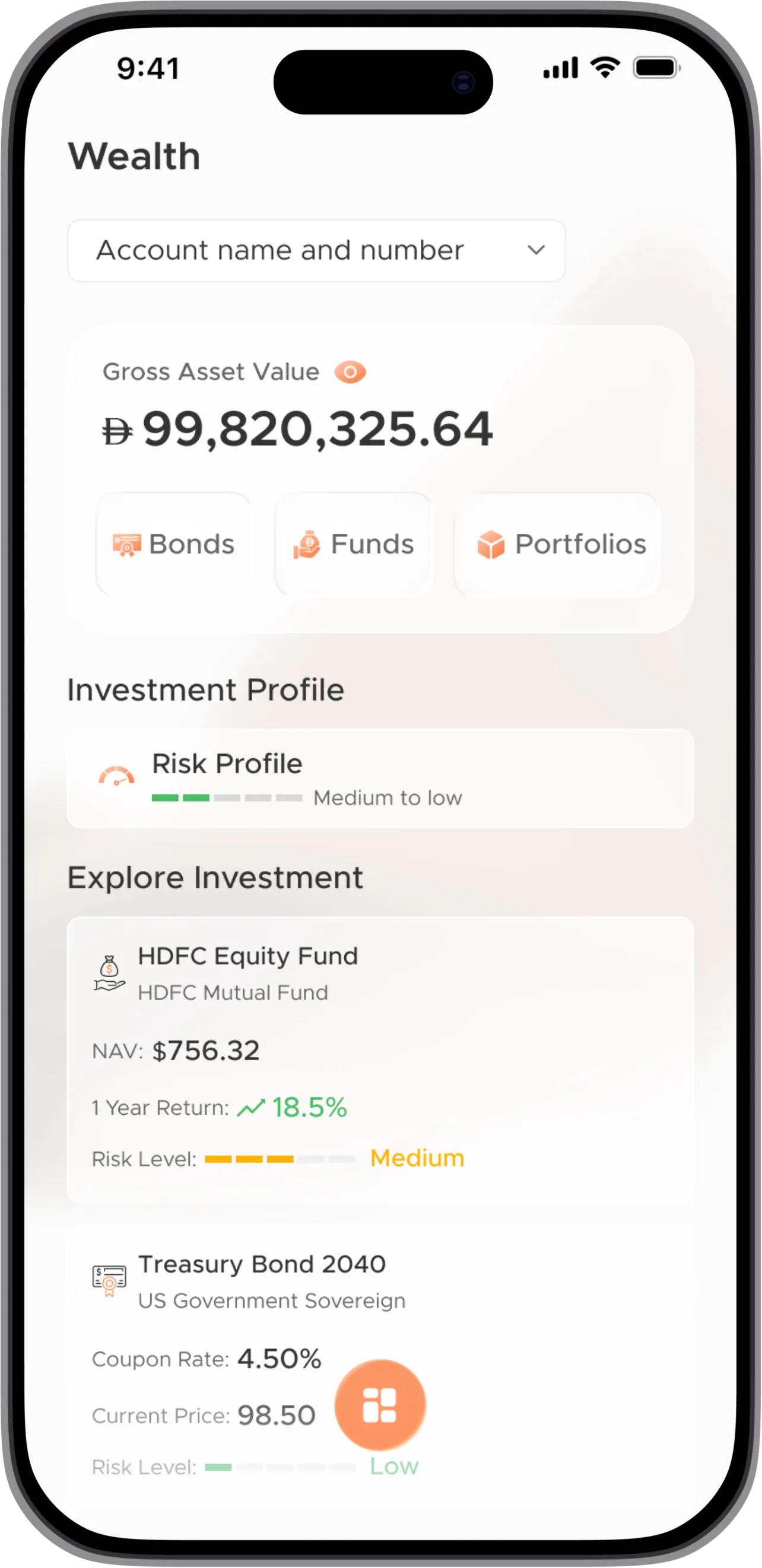
Products lived in separate destinations.
Clients think about total wealth, not internal product categories.
Place gross asset value, allocation and opportunities in one hierarchy.
One legible view of the complete banking relationship.